If you want an equestrian property in Ocala, Turning Hawk Ranch deserves a closer look. This community offers a very specific lifestyle that can be easy to miss if you only search by zip code or broad city data. For buyers who care about acreage, horse-friendly zoning, and trail access, this guide will help you understand what Turning Hawk really offers and how to shop it with confidence. Let’s dive in.
Where Turning Hawk Fits
Turning Hawk Ranch is best understood as a southeast Ocala equestrian community, not a typical 34471 housing story. Recent listings place the neighborhood in the 34480 area, and that matters because local pricing and property types look very different there than they do in 34471.
You may also see the community listed under several names, including Turning Hawk Ranch, Turning Hawk Ranches, Turning Hawk II, and Turning Hawk Ranch Unit 02. If you are searching online, knowing those naming variations can help you catch more available properties and avoid missing a new listing.
The setting is one of the community’s biggest draws. Turning Hawk is described in listing and market sources as a gated, deed-restricted equestrian neighborhood with A-1 agricultural zoning, board fencing, and parcels that are often in the 2.5- to 10-plus-acre range.
Why Equestrian Buyers Notice It
Turning Hawk appeals to buyers who want a horse property that feels established and practical. The community is considered mature and largely built out, so most opportunities are resale homes or the occasional undeveloped parcel rather than a wave of brand-new inventory.
That resale-based feel can work in your favor. Instead of trying to imagine a future neighborhood from a site plan, you can often evaluate real fencing, existing barn setups, mature landscaping, and the way the homesite functions day to day.
Another major advantage is location within Marion County’s horse country. Marion County identifies Ocala and Marion as the Horse Capital of the World and notes that the county has more horses and ponies than any other county in the United States.
Trail Access Sets It Apart
For many riders, Turning Hawk’s biggest differentiator is not the size of the barns. It is the ride-out potential.
A recent Turning Hawk II lot listing notes that the neighborhood borders the Cross Florida Greenway and the Santos trail system, with zoning that allows horses. That gives the community a more trail-oriented identity than some farm areas that focus more on larger training setups or denser barn infrastructure.
The Cross Florida Greenway is a meaningful amenity in this part of the market. Marion County says the Greenway spans 110 miles and includes more than 80 miles of equestrian trails, which gives southeast Ocala buyers a strong recreational and conditioning resource close to home.
The Florida Horse Park also strengthens the location story. Marion County describes it as a 500-acre complex less than 10 miles south of downtown Ocala, which adds another valuable equestrian destination on this side of the county.
What Properties Look Like
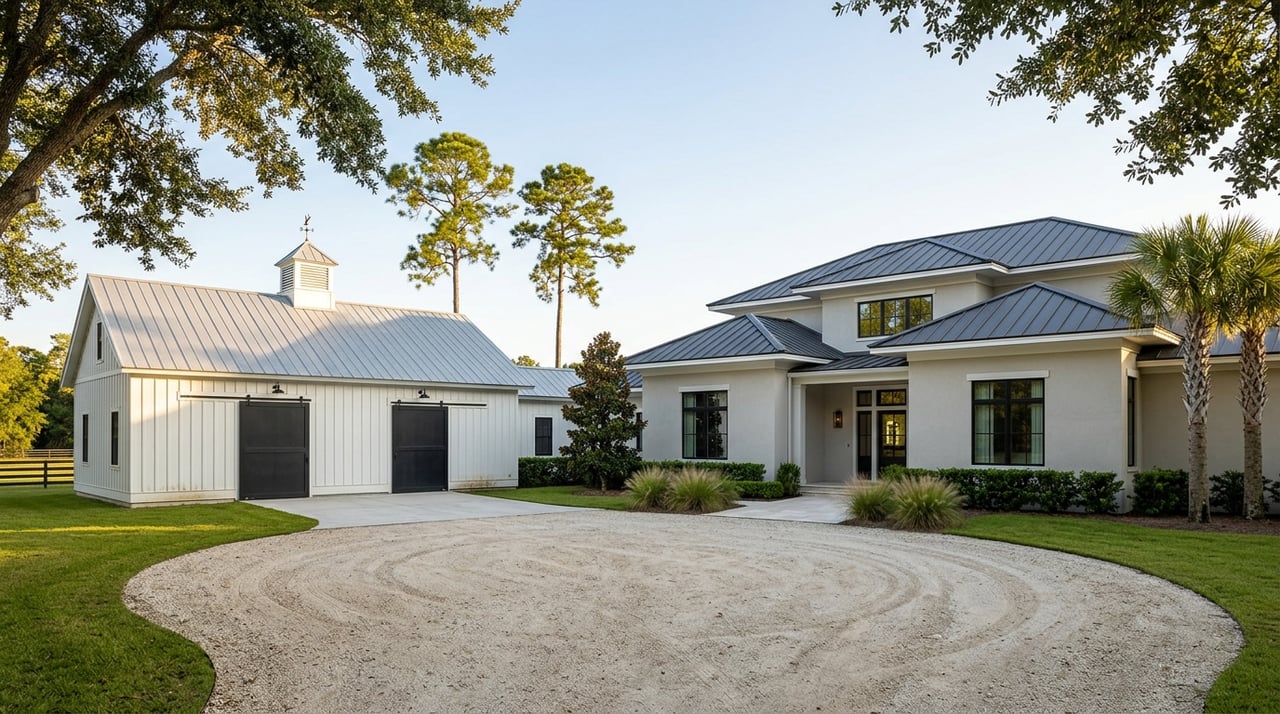
Turning Hawk is not a one-size-fits-all community. Recent examples show everything from smaller land opportunities to substantial mini-farms and estate-style homes.
Current and recent listings have included a 2.6-acre lot, 4.3- to 5-acre estate parcels, a 5.03-acre farm, a 5.15-acre farm, a 7.3-acre estate, and a 13.7-acre farm. That range gives you flexibility, but it also means you need to compare properties by use and improvements, not just by acreage.
Barns in Turning Hawk tend to be functional and usable rather than oversized. Recent examples include:
- A 3-stall shedrow barn with tack and feed space
- A 4-stall center-aisle block barn with oversized 13-by-14 stalls and an indoor wash stall
- A 5-stall shedrow barn with auto-waterers and a wash rack
- A 5-stall center-aisle block barn with an office and covered parking
Some parcels are also sold as cleared land with room to design your own barn and paddock layout. If your priority is customizing your horse setup from the start, those properties can be especially appealing.
What Buyers Can Expect to Pay
Turning Hawk has a broad price ladder. That is one reason broad Ocala averages do not tell the full story here.
At the entry end, a recent 2.6-acre lot was listed at $299,999 and included an HOA fee of $83 per month. At the upper end, a 5-acre estate was listed at $1.95 million and was marketed with room for a barn, paddocks, and additional equestrian improvements.
Between those points, recent sold or off-market examples help define the middle of the market. They include about $1.05 million on just over 4 acres with a 4-stall barn, about $1.085 million on 5.03 acres with a 5-stall barn, about $1.135 million on 5.15 acres with a 4-stall barn, about $1.4 million on 13.7 acres with a 5-stall center-aisle barn, and about $1.895 million on 7.3 acres for a larger estate home.
The key takeaway is simple: Turning Hawk behaves more like a premium mini-farm corridor than a uniform neighborhood. Home finish level, barn quality, fencing, and overall layout often matter more than acreage alone.
How It Compares to Broader Ocala
Turning Hawk sits above the broader Ocala market once horse-specific improvements are part of the package. Realtor.com reported an April 2026 median listing price of $294,990 for Ocala overall, while the 34480 zip code showed a median listing price of $274,950.
That contrast is useful for buyers who wonder why a Turning Hawk property can look expensive relative to citywide averages. Land-only options may sit closer to general market pricing, but a move-in-ready equestrian property with usable fencing, barn space, and a finished residence quickly moves into a much higher bracket.
Market pace also looks fairly measured. Realtor.com’s February 2026 snapshot described the area as a balanced market, with homes selling at about asking price on average, and an April 2026 neighborhood page showed 8 homes for sale and no rentals.
Turning Hawk vs Other Equestrian Areas
If you are comparing communities, it helps to know where Turning Hawk fits in the Ocala equestrian landscape.
Meadow Wood Farms
Meadow Wood Farms is often a helpful comparison for buyers who want an established horse-focused neighborhood with a lower entry price and often smaller acreage. Recent examples there include properties from about 1.4 acres up to 6.8 acres, with several barns and horse setups priced under $900,000.
In practical terms, Meadow Wood Farms may suit buyers who want an equestrian setting on a somewhat smaller scale or lower budget. Turning Hawk usually reads as a more premium southeast Ocala option with stronger trail-forward positioning.
Ocala Downs
Ocala Downs sits on a larger and more intensive end of the spectrum. Recent examples there include 10- to 13.7-acre farms, 4-stall to 10-stall barn setups, and pricing that has ranged from roughly $1.08 million to $1.6 million, with a sold 10-acre farm at $2.2 million showing a higher-end ceiling.
That area is often associated with bridle paths, riding and driving trails, and proximity to major venues in northwest Ocala. Buyers who prioritize larger farm scale and show-oriented infrastructure often compare northwest options like that with southeast communities such as Turning Hawk.
The Lifestyle Difference
The comparison often comes down to how you want to live with your horses. Turning Hawk tends to appeal to buyers who want quieter mini-farm living, practical acreage, and strong southeast trail access.
By contrast, buyers focused on larger training operations and closer access to the northwest Ocala show environment may look elsewhere. The World Equestrian Center - Ocala, described by its official hospitality site as the largest equestrian complex in the United States, is one reason northwest Ocala attracts that type of search.
What to Check Before You Buy
Every equestrian purchase has details beyond the house itself. In Turning Hawk, a careful review of the property’s horse functionality is especially important.
Here are a few smart checkpoints:
- Confirm the exact community name and phase used in the listing
- Review acreage layout, not just total acreage
- Check whether the barn is already in place or if you will need to build
- Ask about fencing, paddock configuration, and wash or feed areas
- Budget for HOA fees, which recent listing data show around $83 to $100 per month
- For land-only parcels, plan for well and septic due diligence
If you want move-in-ready horsekeeping, recent examples suggest that many buyers should focus on 4- to 5-acre properties with a 3- to 5-stall barn, paddocks, fencing, and practical support spaces such as a tack or feed room and wash rack.
If you need more acreage or a larger barn, options do exist. You should also expect pricing to rise quickly as scale, barn utility, and estate finishes increase.
Who Turning Hawk Fits Best
Turning Hawk is especially compelling if you want a property that supports riding as part of daily life. It can be a strong match for buyers who value direct trail-oriented living, manageable mini-farm acreage, and a mature neighborhood feel in southeast Ocala.
It may also appeal to buyers who want a refined home environment without stepping away from horse ownership. In this community, the value often comes from the balance of house, land, and equestrian utility rather than from any single feature on its own.
If you are weighing Turning Hawk against other equestrian communities, the best next step is to compare the lifestyle each one supports, not just the asking price. A well-matched property should fit how you ride, how you care for your horses, and how you want your day-to-day life to feel.
If you are considering Turning Hawk Ranch or comparing southeast Ocala equestrian options, Stacey Rollins offers concierge-level guidance tailored to your goals, with deep local knowledge of Ocala’s horse property market and a highly personal approach from first tour to closing.
FAQs
What is Turning Hawk Ranch in Ocala known for?
- Turning Hawk Ranch is known as a gated, deed-restricted equestrian community in southeast Ocala with A-1 agricultural zoning, horse-friendly parcels, board fencing, and strong access to nearby trail systems.
What size properties are common in Turning Hawk Ranch?
- Recent examples range from a 2.6-acre lot to farms and estates of 13.7 acres, with many properties falling in the roughly 4- to 5-acre range.
What price range should buyers expect in Turning Hawk Ranch?
- Recent listing and sales examples range from about $299,999 for a land parcel to about $1.95 million for a larger estate property, with many improved horse properties landing around the low- to mid-$1 million range.
What kind of barns do Turning Hawk Ranch properties have?
- Recent examples include 3-stall to 5-stall barns, with features such as tack and feed rooms, wash racks, oversized stalls, office space, and covered parking depending on the property.
How does Turning Hawk Ranch compare with Meadow Wood Farms?
- Turning Hawk Ranch generally trends more premium and trail-oriented, while Meadow Wood Farms can offer smaller acreage and a lower entry price in another established horse-focused setting.
Is Turning Hawk Ranch a good option for trail riders?
- Yes. Recent listing information highlights access near the Cross Florida Greenway and the Santos trail system, making the community especially appealing for buyers who prioritize ride-out convenience.