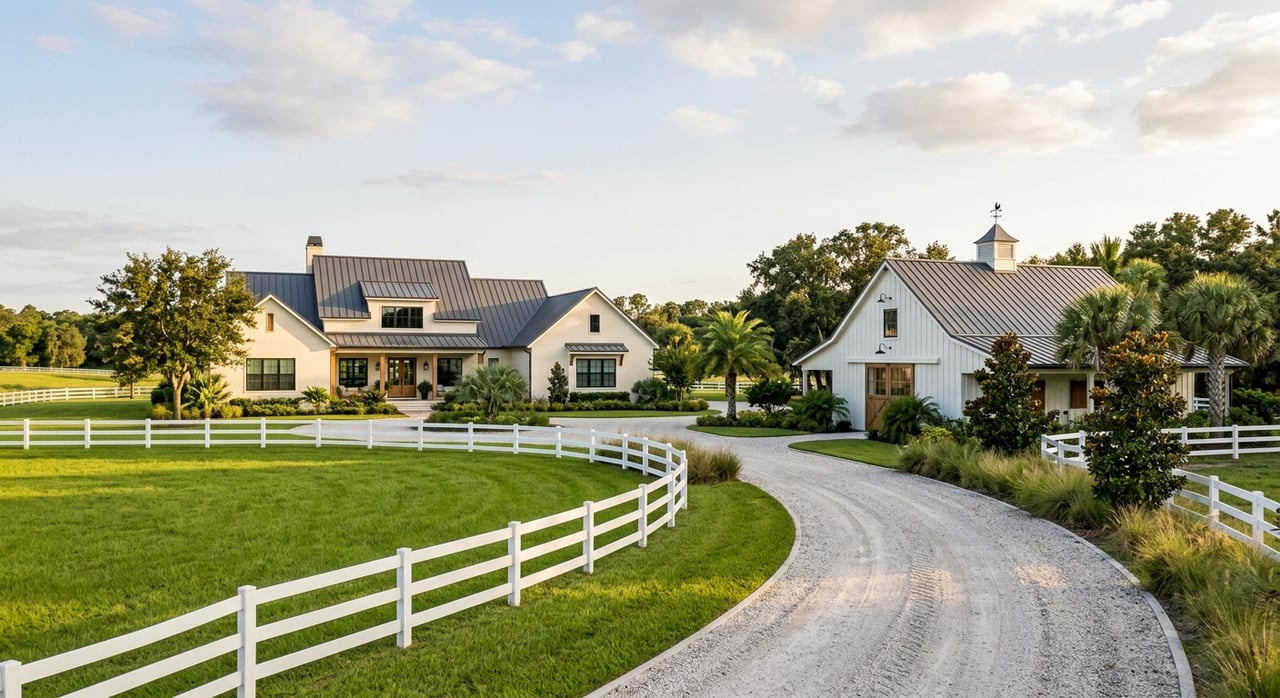
Wondering if a mini-farm in Ocala Downs is the right fit for your horses and your lifestyle? It is an exciting idea, but it also comes with more moving parts than a typical home purchase. If you are considering this horse-focused community, you need clear information on acreage, rules, barn function, and day-to-day upkeep before you make an offer. Let’s dive in.
Ocala Downs at a Glance
Ocala Downs is a small equestrian community in northwest Ocala with 38 lots, according to the HOA. Public addresses for the neighborhood are on NW 114th Loop in ZIP code 34475, which places it in Ocala’s horse country.
That location matters because Ocala Downs is not the same submarket as Silver Springs Shores in 34472. Even though both are in Marion County, they serve very different buyers and property styles. If you are searching for a mini-farm in Ocala Downs, make sure the property is actually within the community and subject to its deed restrictions.
Ocala and Marion County have a strong equestrian identity overall. The area includes more than 600 thoroughbred breeding and training farms across more than 70,000 acres, along with major venues like World Equestrian Center, HITS Post Time Farm, and Florida Horse Park.
What a Mini-Farm Here Looks Like
In Ocala Downs, a “mini-farm” usually still means substantial acreage. Public listing examples in the community generally range from about 10.27 acres to 13.67 acres, with several properties around the 10- to 11-acre mark.
That acreage pattern gives you an important clue about the neighborhood. Ocala Downs is not set up like a low-acreage suburban area with a barn added later. It is better understood as a mature horse-farm enclave where land use and equine function are central to the property.
Homes in the neighborhood are typically custom single-family ranch or traditional-style residences. Many are one-story homes with 3 to 4 bedrooms, 2 to 4 bathrooms, open or split floor plans, screened lanais or pools, and attached or detached garages.
Most of the homes reviewed in public listings were built between 1984 and 2001. For many buyers, that means the first evaluation is often about the land, fencing, and horse setup, with house updates coming second.
Barns and Horse Features to Expect
Barn layouts can vary quite a bit from one parcel to another. Current and recent listing examples have included a 3-stall block barn, a 4-stall horse barn, a 5-stall center-aisle barn with a barn apartment, and a 10-stall block barn with a feed room, tack room, wash rack, storage, and bath.
You will also commonly see board-fenced or cross-fenced paddocks. Some properties mention space for an arena or jump field, which can be a meaningful advantage if you want room to train on-site or expand over time.
This variety is why two properties with similar acreage can function very differently. A well-planned 10-acre parcel with practical fencing, useful barn flow, and manageable turnout can outperform a larger tract with a layout that does not match your routine.
Why the Community Rules Matter
Ocala Downs is very horse-forward, but it is still structured by community rules. The recorded CC&Rs allow single-family residential use as well as horse keeping, breeding, and sale.
The same documents also set standards for the built environment. Principal residences must be at least 1,850 square feet and include an enclosed double-car garage, and the rules address items such as fences, driveways, and underground utilities.
One of the most important details for horse buyers is stocking. The CC&Rs generally state that each lot may keep one horse per acre under fence, with a named exception for a specific lot.
That means your due diligence should go beyond total acreage. What matters is how much acreage is actually under fence and whether that setup supports the number of horses you plan to keep.
Day-to-Day Ownership Questions
A mini-farm purchase is about more than the home and barn. It is also about how the property works every day, from maintenance to waste handling to storage.
The Ocala Downs rules require owners to keep their lots neat and free of junk or overgrowth. The association may step in and bill the owner if maintenance standards are not met, and the documents also regulate storage for farm equipment, trailers, and vehicles.
The CC&Rs also prohibit hunting and firearms within the community. For some buyers, that may align well with the neighborhood environment. For others, it is an important rule to understand upfront.
Trail Access and Riding Convenience
For many equestrian buyers, riding access is part of the appeal. Some Ocala Downs listings describe private trails or bridle paths throughout the community, and one listing mentions underground tunnels created for equine traffic.
If public trail riding matters to you, Santos Trailhead is another point of interest. It sits west of U.S. 441 between Ocala and Belleview and connects to the Cross Florida Greenway’s more than 60 miles of horse trails.
That gives you a different kind of flexibility. You may be able to enjoy private riding features within the community while also having access to larger regional trail systems nearby.
Venue Access for Training and Showing
If you train, compete, or travel regularly with horses, Ocala Downs benefits from being in Marion County’s broader equestrian network. Nearby destination venues are a major part of the local draw.
World Equestrian Center is located at 1750 NW 80th Ave in Ocala on 378 acres. HITS Post Time Farm is at 13710 US 27 on 500 acres, and Florida Horse Park is at 11008 County Road 475 on 500 acres, less than 10 miles south of downtown Ocala.
When you tour a property, think beyond the front gate. Consider how the farm functions relative to the places you will actually use, whether that is WEC, HITS, Florida Horse Park, or Santos.
Zoning Still Needs Verification
Even in a horse-oriented neighborhood, zoning should be verified parcel by parcel. One Ocala Downs parcel profile shows A-2 zoning, and Marion County’s A-2 Improved Agriculture district is intended for general farming and animal husbandry with accessory uses.
That said, zoning is not something to assume based on a listing description alone. If you are planning changes such as a new barn, a guest house, additional support structures, or specific farm improvements, it is smart to confirm what approvals may be needed from the association and Marion County.
Smart Questions Before You Buy
A showing is your chance to look past the surface and test how well a property supports your plans. In Ocala Downs, these questions can help you make a more informed decision:
- How many acres are actually under fence?
- Does that fenced area support the number of horses you want under the community rule?
- Which existing structures are already approved?
- Would future additions such as barns, sheds, tack rooms, wash racks, round pens, or arenas need association or county approval?
- Is the parcel definitely within Ocala Downs proper, and what deed restrictions apply to that specific lot?
- How are manure, wash water, drainage, and compost handled on the property?
- How far are those systems from wells or surface water?
- How many acres can realistically remain in grazing condition?
- Who maintains roads, culverts, fences, and bridle easements?
- What does the association budget cover?
- How practical is the location for the equestrian venues and trail systems you plan to use most?
Pasture and Management Matter More Than You Think
On a small-acreage horse property, land management has a direct effect on cost and usability. UF/IFAS notes that manure management on small horse farms should be handled carefully to help protect water quality.
Pasture expectations also need to stay realistic. UF/IFAS says a mature horse may need about 1 to 2.5 acres depending on pasture productivity, and once stocking exceeds one horse per acre, the pasture is no longer functioning primarily as a feed source.
In practical terms, that means a 10-acre farm is not automatically simple to manage just because it sounds spacious. The way the land is fenced, drained, grazed, and maintained can shape your day-to-day experience as much as the home itself.
Is Ocala Downs Right for You?
Ocala Downs can be a strong fit if you want a horse-centric community with larger tracts, established equestrian character, and rules that already anticipate horse ownership. For many buyers, the appeal is the combination of acreage, barn potential, riding access, and proximity to Marion County’s major horse venues.
The key is buying with a clear plan. When you focus on acreage under fence, barn usefulness, zoning, trail access, and realistic maintenance needs, you are far more likely to choose a property that supports your lifestyle from day one.
If you are exploring equestrian property in Ocala and want a more tailored look at how Ocala Downs compares with other horse-focused areas, Stacey Rollins offers concierge-level guidance rooted in Marion County market knowledge and hands-on equestrian property experience.
FAQs
What is Ocala Downs in Ocala, Florida?
- Ocala Downs is a small equestrian community in northwest Ocala with 38 lots, known for larger horse-property tracts and deed restrictions that support single-family residential use and horse-related activity.
Where is Ocala Downs located?
- Public Ocala Downs addresses are on NW 114th Loop in ZIP code 34475 in northwest Ocala, which is separate from southeastern Marion County areas such as Silver Springs Shores in 34472.
How large are mini-farms in Ocala Downs?
- Public listing examples generally range from about 10.27 acres to 13.67 acres, with many properties around 10 to 11 acres.
How many horses can you keep in Ocala Downs?
- The community CC&Rs generally allow one horse per acre under fence, with a named exception for one specific lot, so buyers should verify fenced acreage on the property they are considering.
What kinds of barns are found in Ocala Downs?
- Listing examples have included 3-stall, 4-stall, 5-stall, and 10-stall barns, with features such as feed rooms, tack rooms, wash racks, storage areas, baths, and in one case a barn apartment.
Does Ocala Downs offer trail riding access?
- Some listings mention private trails or bridle paths within the community, and one listing references underground equine tunnels, while Santos Trailhead nearby connects riders to more than 60 miles of horse trails in the Cross Florida Greenway.
What should you check before buying a mini-farm in Ocala Downs?
- Key items include acreage under fence, barn layout, existing approvals, possible future improvements, zoning, manure and drainage handling, pasture usability, maintenance responsibilities, and access to the equestrian venues you use most.